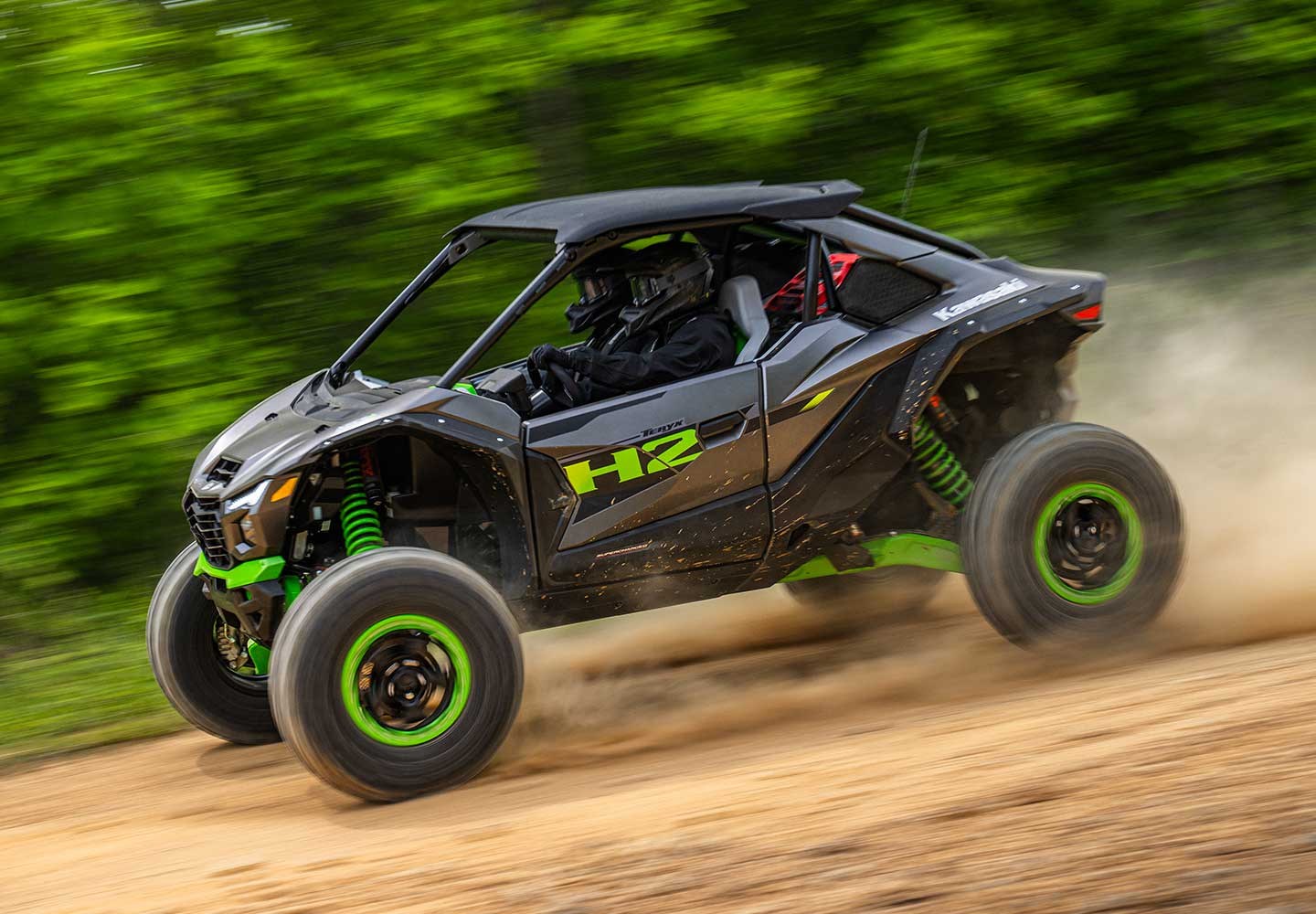
The Kawasaki Teryx H2 vs Polaris RZR Pro R battle is the high-performance UTV comparison many riders have been waiting for. Kawasaki brings a 250-horsepower supercharged engine, a low-profile two-seat chassis and an aggressive starting price. Polaris answers with its proven 225-horsepower ProStar Fury 2.0, a 74-inch stance and 29 inches of usable suspension travel.
Some shoppers search for this matchup as “Kawasaki KRX H2 vs RZR Pro R.” Kawasaki’s official model name is TERYX H2; it is distinct from the naturally aspirated TERYX KRX 1000. This guide uses the official name while answering the same buying question.
Kawasaki Teryx H2 vs Polaris RZR Pro R: Quick Verdict
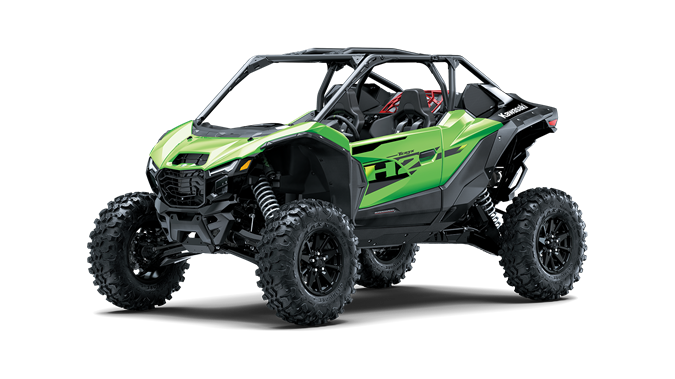
Choose the Kawasaki Teryx H2 if you want stronger headline horsepower, instant supercharged response, 33-inch tires, a two-seat layout and a lower base MSRP. Choose the Polaris RZR Pro R if your priority is desert-proven chassis development, more published usable suspension travel and Polaris’ mature RZR ecosystem.
| Category | 2027 Kawasaki Teryx H2 | 2027 Polaris RZR Pro R |
|---|---|---|
| Engine | 999cc supercharged inline-four | 2.0L naturally aspirated inline-four |
| Claimed power | 250 hp (ISO 4106 measurement) | 225 hp |
| Width | 74 inches | 74 inches |
| Suspension highlight | FOX 3.0 Internal Bypass shocks | Up to 29 inches usable travel |
| Base tires | 33-inch Maxxis Carnivore Plus | Performance-oriented off-road tires vary by trim |
| Starting MSRP | $32,899 | $43,999 |
| Best fit | Power, value and mixed high-speed recreation | Desert speed, whoops and established RZR support |
Specifications and pricing can change by model year, trim and destination fees. Kawasaki also notes that its horsepower is measured under ISO 4106, so the two manufacturers’ figures are not necessarily an apples-to-apples dyno comparison. Verify the exact machine with your dealer.
Engine and Horsepower: Supercharged Punch vs Big-Bore Response
The Teryx H2’s biggest talking point is its Kawasaki-built 999cc liquid-cooled inline-four. An engine-driven supercharger helps it produce a claimed 250 horsepower without the exhaust-driven lag associated with a turbocharger. Kawasaki adapted lessons from its H2 powersports program for a broad, controllable off-road powerband rather than simply chasing a peak number.
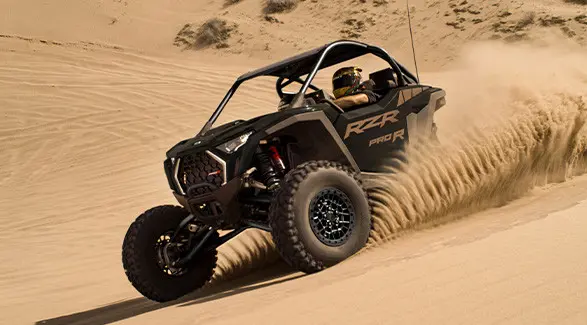
The RZR Pro R takes a different route. Its 2.0-liter ProStar Fury inline-four is naturally aspirated and rated at 225 horsepower. That larger displacement and linear throttle delivery have made the Pro R a benchmark for predictable desert acceleration. There is no supercharger system to package, but Polaris still has to manage the loads produced by a very large four-cylinder engine through its CVT and driveline.
On paper, Kawasaki wins the horsepower round by 25 hp. In practice, tire choice, clutch calibration, vehicle weight, elevation and terrain can matter as much as the brochure number. The most meaningful advantage may be the Teryx H2’s immediate, theatrical supercharged response; the Pro R counters with familiar, progressive power delivery.
Suspension and Chassis: Where the RZR Pro R Fights Back
Polaris designed the Pro R around high-speed desert control. Its 74-inch stance and MaxLink rear suspension deliver up to 29 inches of usable travel, helping the chassis stay composed through deep whoops and rough G-outs. Upper trims add DYNAMIX DV semi-active suspension, which continuously adjusts damping as the terrain and driver inputs change.
The base Teryx H2 uses substantial FOX 3.0 Internal Bypass shocks with position-sensitive damping. The Teryx H2 Limited eS moves to FOX 3.0 Live Valve units and Kawasaki Electronic Control Suspension Plus, paired with an electronically switchable sway bar. That system can favor roll control at speed or freer articulation when the trail turns technical.
The simple takeaway: the Pro R has the stronger published travel number and a long record in wide-open terrain. The Kawasaki’s combination of bypass shocks, electronic suspension technology on the premium trim and 33-inch tires makes it a serious all-around package, not merely an engine showcase.
Handling and Terrain
Dunes and open desert
The RZR Pro R remains the safer recommendation for riders who spend most weekends hammering long whoop sections. Its chassis geometry, suspension travel and extensive desert-racing development are central to the machine’s identity. The Teryx H2 should be extremely fast in the same environment, but riders should compare shock tuning—not horsepower alone—before choosing.
Rocky and mixed trails
Both machines are 74 inches wide, so neither is intended for narrow 50- or 60-inch trail systems. The Kawasaki’s selectable 2WD/4WD system, locking front differential, 33-inch tires and available disconnecting sway-bar strategy give it an appealing technical-terrain toolkit. The Polaris offers selectable drive modes and a huge aftermarket for tailoring protection, tires and clutching.
Recreational comfort
Kawasaki emphasizes a roomy automotive-style cabin, high-backed bucket seats, a tilt steering wheel, plentiful storage and smartphone connectivity through RIDEOLOGY THE APP POWERSPORTS. Polaris counters with RIDE COMMAND, available semi-active suspension and a deep catalog of factory audio, storage and navigation options. Sit in both: seat shape, sightlines and pedal position are personal and can outweigh a spec-sheet win.
Price and Value
At the time of writing, Kawasaki lists the 2027 Teryx H2 from $32,899, while Polaris lists the 2027 RZR Pro R from $43,999 before destination and dealer charges. That roughly $11,100 base-price gap is substantial. It can fund a trailer upgrade, helmets, communication equipment, skid protection and a second set of tires.
Trim-to-trim comparison matters, however. The Teryx H2 Limited eS carries a much higher price because it adds electronic suspension, an electronic sway bar, Garmin navigation and other premium equipment. A fair shopping list should compare the exact suspension, wheels, navigation and audio features you will actually use.
Reliability, Maintenance and Aftermarket
The Pro R benefits from several years in the market and an enormous supply of cages, suspension parts, storage solutions, skid plates and performance upgrades. More shops already understand common service procedures and clutch setups.
The Teryx H2 is newer, and its supercharged package adds complexity. Kawasaki has engineered the engine, intake and cooling system as one integrated platform, but long-term owner data will take time to accumulate. Buyers should follow the factory break-in and service schedule closely, keep the air-intake system clean and confirm recall completion before delivery. Kawasaki currently posts an important recall notice for certain 2026 Teryx4 H2 and Teryx5 H2 models; check the VIN with an authorized dealer.
Which UTV Should You Buy?
- Buy the Kawasaki Teryx H2 for maximum claimed horsepower per dollar, instant supercharged character, 33-inch tires and a fresh two-seat platform.
- Buy the Polaris RZR Pro R for a proven high-speed desert chassis, up to 29 inches of usable travel and the broadest established upgrade ecosystem.
- Test-drive both if cabin ergonomics and throttle feel matter most. A 15-minute dealer demo can reveal more than a long spec table.
Frequently Asked Questions
Is the Kawasaki Teryx H2 the same as a KRX H2?
No. Kawasaki officially calls the 250-horsepower two-seat model the Teryx H2. “KRX H2” is a common informal search term, likely because riders associate Kawasaki’s sport side-by-sides with the Teryx KRX 1000.
Which has more horsepower, the Teryx H2 or RZR Pro R?
Kawasaki claims 250 hp for the Teryx H2, while Polaris claims 225 hp for the RZR Pro R. Kawasaki states that its figure uses ISO 4106, so direct dyno results may differ from the brochure comparison.
Which is better for desert riding?
The RZR Pro R has the edge for established desert chassis performance and published suspension travel. The Teryx H2 offers more claimed power and a lower starting price, making it a compelling alternative for fast recreational riding.
Which is the better value?
The base Teryx H2 is the clear spec-sheet value at roughly $11,100 less before fees. The Pro R may justify its premium for riders who prioritize its longer-travel chassis, DYNAMIX options and mature aftermarket.
Final Verdict
The Kawasaki Teryx H2 wins on claimed horsepower, supercharged excitement and base-price value. The Polaris RZR Pro R wins on suspension-travel bragging rights, desert pedigree and ecosystem depth. For many buyers, Kawasaki is the more disruptive new choice; for dedicated high-speed desert drivers, the Pro R remains exceptionally difficult to dismiss.
Research sources: Kawasaki Teryx H2 official model page, Polaris RZR Pro R official model page, and Kawasaki recall information.