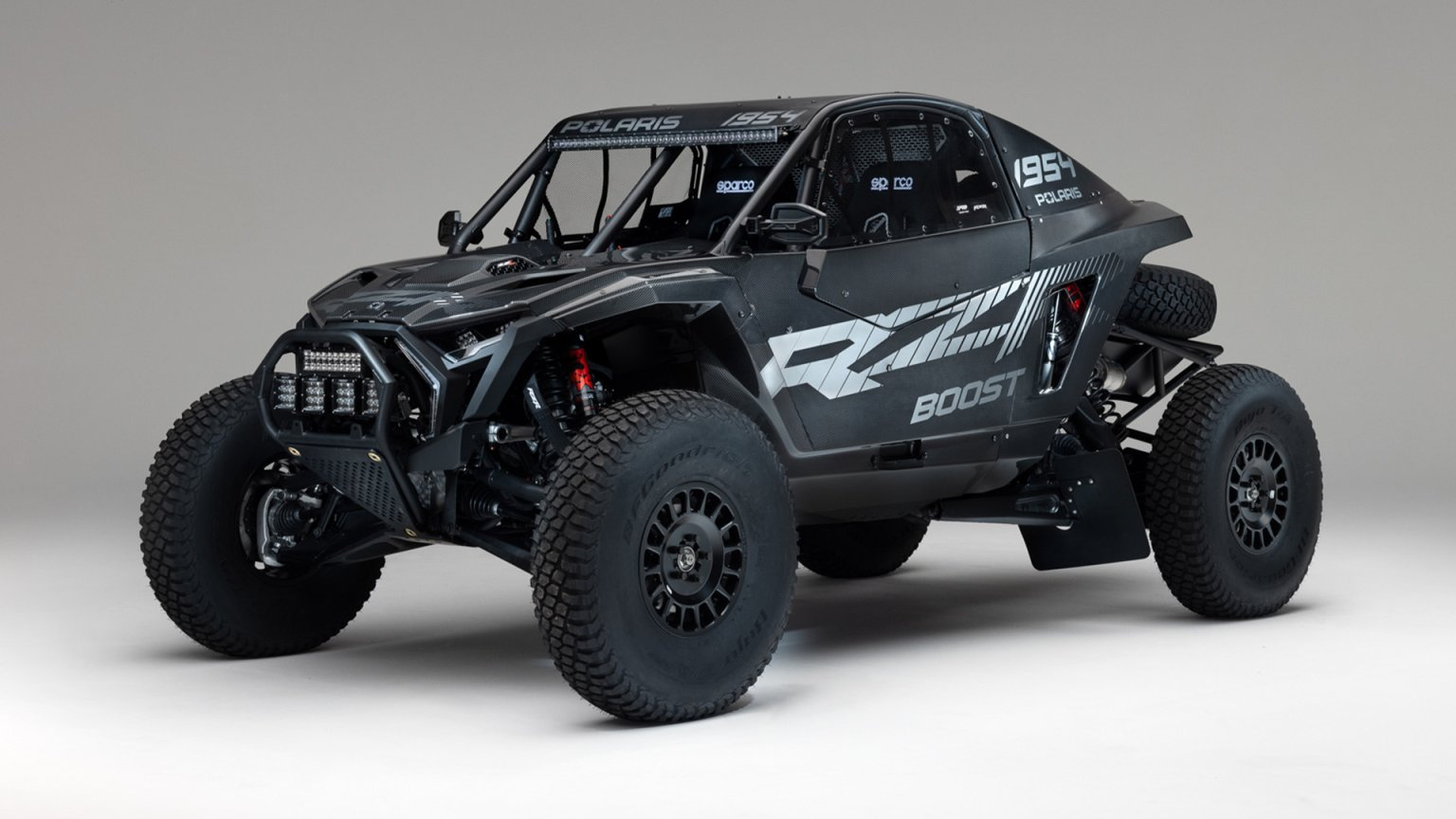
The 2027 Polaris RZR Pro R Factory Boost brings up to 400 horsepower to a customer race UTV priced from $200,000 US MSRP. The turbocharged engine makes the headline, but the package around it explains the price: a longer competition chassis, carbon-fiber bodywork, race electronics and a fuel system designed for long desert stages.
Polaris unveiled the machine at Camp RZR in Glamis on October 30, 2026. It joins the existing Gen 2 RZR Pro R Factory rather than replacing it. Here is what buyers and off-road fans need to know about the new Factory Boost, how it compares with the production Pro R Boost, and which launch specifications still need clarification.
Polaris RZR Pro R Factory Boost specs at a glance
| Specification | 2027 Factory Boost |
|---|---|
| Starting price | $200,000 US MSRP, before applicable fees |
| Engine | 1,997cc turbocharged ProStar Fury four-cylinder |
| Claimed output | Up to 400 hp, depending on drive mode |
| Transmission | Automatic PVT, P/R/N/L/H |
| Drivetrain | Selectable 2WD, 4WD and 4WD Lock |
| Wheelbase / width | 111 inches / 74 inches |
| Ground clearance | 17.5 inches |
| Fuel cell | 45 gallons, approximately 170 liters |
| Wheels and tires | Method 407 wheels; 35-inch BFGoodrich KR2 tires |
| Seating | Two occupants |
| First order-window deadline | February 15, 2027 |
Specifications reflect Polaris’ launch information checked October 30, 2026. Output, equipment and pricing should be confirmed for the ordered configuration.
A 400-hp turbo engine is only part of the story
The Factory Boost uses a race-tuned version of the turbocharged ProStar Fury 2.0-liter engine. Its maximum claimed output depends on drive mode. That qualification matters: “400 hp” describes the top available output, not necessarily every calibration a team will use.
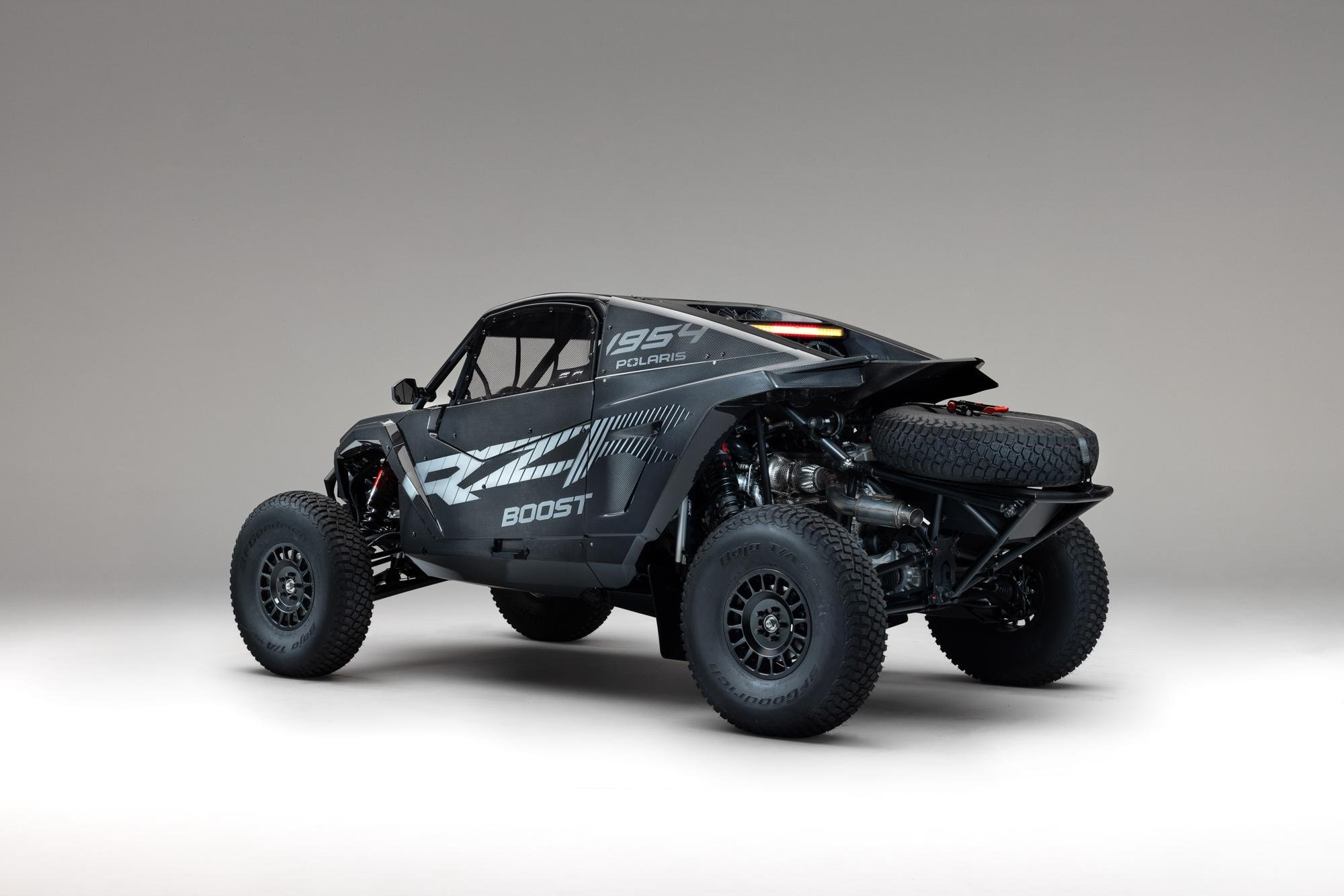
Cooling is equally important when the engine must work hard for hours. Polaris lists a rear-mounted radiator with two 500-watt fans, three intercooler fans and a mechanically pumped transmission cooler. The detailed specification also calls out VP Racing UTV 96 fuel for the Pyrotect fuel cell. Teams should confirm fuel requirements before planning a race program.
Factory Boost vs production RZR Pro R Boost
The production RZR Pro R Boost is rated at 275 hp and starts at $49,999 US MSRP. The Factory Boost adds up to 125 hp, a calculated increase of about 45%, while its starting price is approximately four times higher.
The production machine already has substantial hardware: Polaris quotes 215 lb-ft at 4,000 rpm, a dual-radiator layout, higher-capacity clutching and strengthened driveline components. It is the more relevant model for riders shopping for recreational desert performance.
The Factory Boost changes the buying equation. A race team evaluates service access, cooling margins, data systems, occupant protection and support alongside horsepower. Its purchase price is only the beginning of a budget that may also include spares, transport, entry fees, consumables and a crew. That is why comparing the two vehicles on engine output alone misses their different jobs.
Longer chassis and carbon-fiber bodywork
Polaris extended the wheelbase by 6.5 inches to 111 inches and widened the cockpit by two inches. Larger structural tubing reinforces key chassis areas. Carbon-fiber bodywork and an arched roof were shaped with computational fluid dynamics, including airflow modeling above 100 mph.
The engineering goal is control during sustained high-speed running. More room can also help occupants work comfortably through long stages. However, airflow development above 100 mph is not a published top-speed test. Neither the launch release nor the specification sheet establishes a verified maximum speed.
Suspension, race electronics and cockpit equipment
Three-inch FOX internal-bypass shocks and a FOX steering damper are central to the package. Polaris’ overview describes DYNAMIX DVS control across 12 suspension channels, including selectable hydraulic sway-bar links. Its MoTeC package includes an M150 ECU, C127 display and dual power-distribution modules.
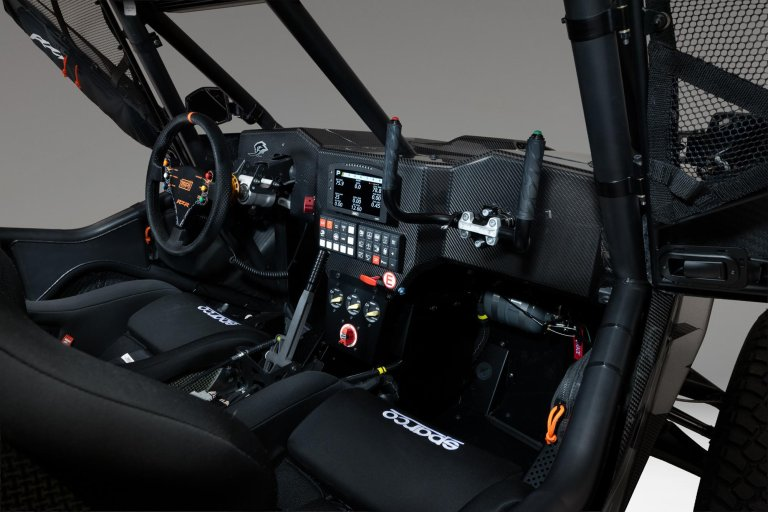
The cockpit includes Sparco six-point harnesses, window nets and fire suppression. Factory wiring supports navigation, lighting and race communications. These details matter because a competition vehicle must help its occupants manage both the course and the machine.
Fuel range and ordering information
Polaris says the 45-gallon fuel cell extends range beyond 200 miles. That is a manufacturer estimate, not a guaranteed distance or a measured fuel-economy rating. Route, terrain, pace and calibration will affect how far the vehicle travels between stops.
Limited-quantity orders are handled through SCI Distribution, which also manages customer support. The first order window closes February 15, 2027. Prospective customers should request a written equipment list, delivery estimate, support terms and confirmation of eligibility for their intended race class.
Is this a Dakar buggy?
The Factory Boost belongs to Polaris’ desert-racing program, but its announced factory-team debut is King of the Hammers in 2027. That is the concrete competition plan in the launch announcement. A reference to Dakar-style capability should not be read as confirmation that this exact 400-hp configuration is approved for every rally category.
Two launch specifications to confirm before ordering
Polaris’ overview lists a 2,700-pound estimated dry weight. Its detailed specification lists 2,600 pounds, but the accompanying 1,224.6-kilogram figure converts to approximately 2,700 pounds. Suspension naming also varies: the overview uses DYNAMIX DVS, while the specification sheet refers to DV 3.0 and the announcement describes DV. We are flagging these inconsistencies rather than choosing a definitive figure without clarification.
Frequently asked questions
How much does the Polaris RZR Pro R Factory Boost cost?
U.S. MSRP starts at $200,000. Confirm taxes, transport, optional equipment and support costs with SCI Distribution.
How much horsepower does it make?
Polaris claims up to 400 hp, depending on drive mode. The production Pro R Boost is rated at 275 hp.
When does the Factory Boost race?
Polaris announced its factory team’s debut for the 2027 King of the Hammers event, with entries planned in multiple races.
Is it the same as a regular Pro R with a turbo kit?
No. The Factory Boost combines its turbo engine with a longer race chassis, competition bodywork, a large fuel cell and dedicated cockpit and electronic systems.
What the Factory Boost means for UTV enthusiasts
The appeal goes beyond its output. Polaris is offering customers an integrated race platform instead of asking them to coordinate every major system themselves. Whether that package earns its price will depend on support, reliability in competition and results once customer teams start racing.
For more perspective on recreational performance UTVs, read our Kawasaki Teryx H2 vs Polaris RZR Pro R comparison, or browse the latest UTV Forge guides.
Sources: Polaris launch announcement; official model overview; official specifications; The Drive’s launch coverage. Photos: Polaris promotional materials.